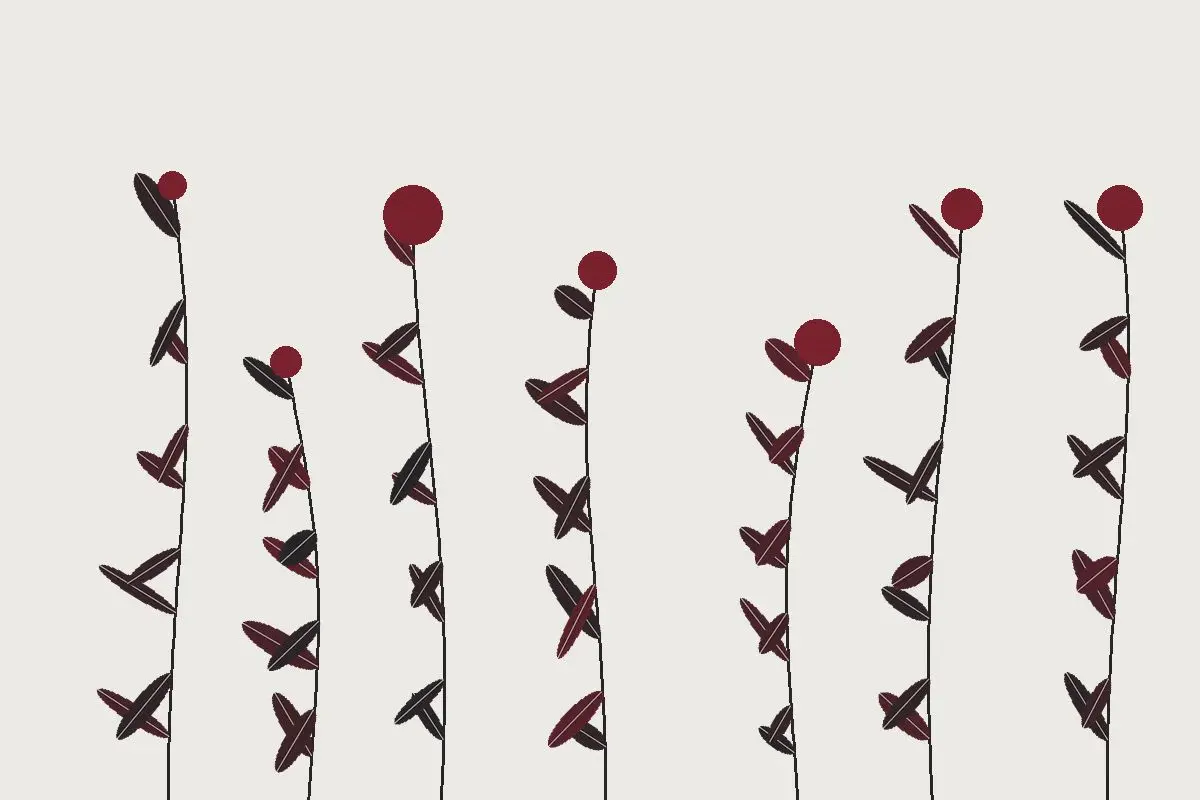
I did not cut back the garden last autumn. Partly this was laziness, and partly it was curiosity: I wanted to see what the stems would look like after the frost. They turned out to be the most beautiful thing in the yard for three whole months, dark lines with the last red berries clinging on, drawn against a pale and empty bed.
Watching them through the kitchen window, I started thinking about endings, and in particular about how badly I end most of the things I write. I tend to tidy up too much. I summarise, I explain, I cut everything back to the ground so nothing is left standing.
Leave a few stems standing. The reader will see the shape of the summer in them without being told.
Pinned above the desk since February
Endings that rest instead of close
The best endings I know do not conclude so much as pause. They leave an image, a question, or a single plain sentence that keeps its shape after the rest of the piece has gone quiet. They trust the reader to carry something home.
The garden is green again now, and the stems have been cleared away to make room. But I have kept a few pressed between the pages of a dictionary, and I look at them whenever I am trying to end something and cannot stop explaining.