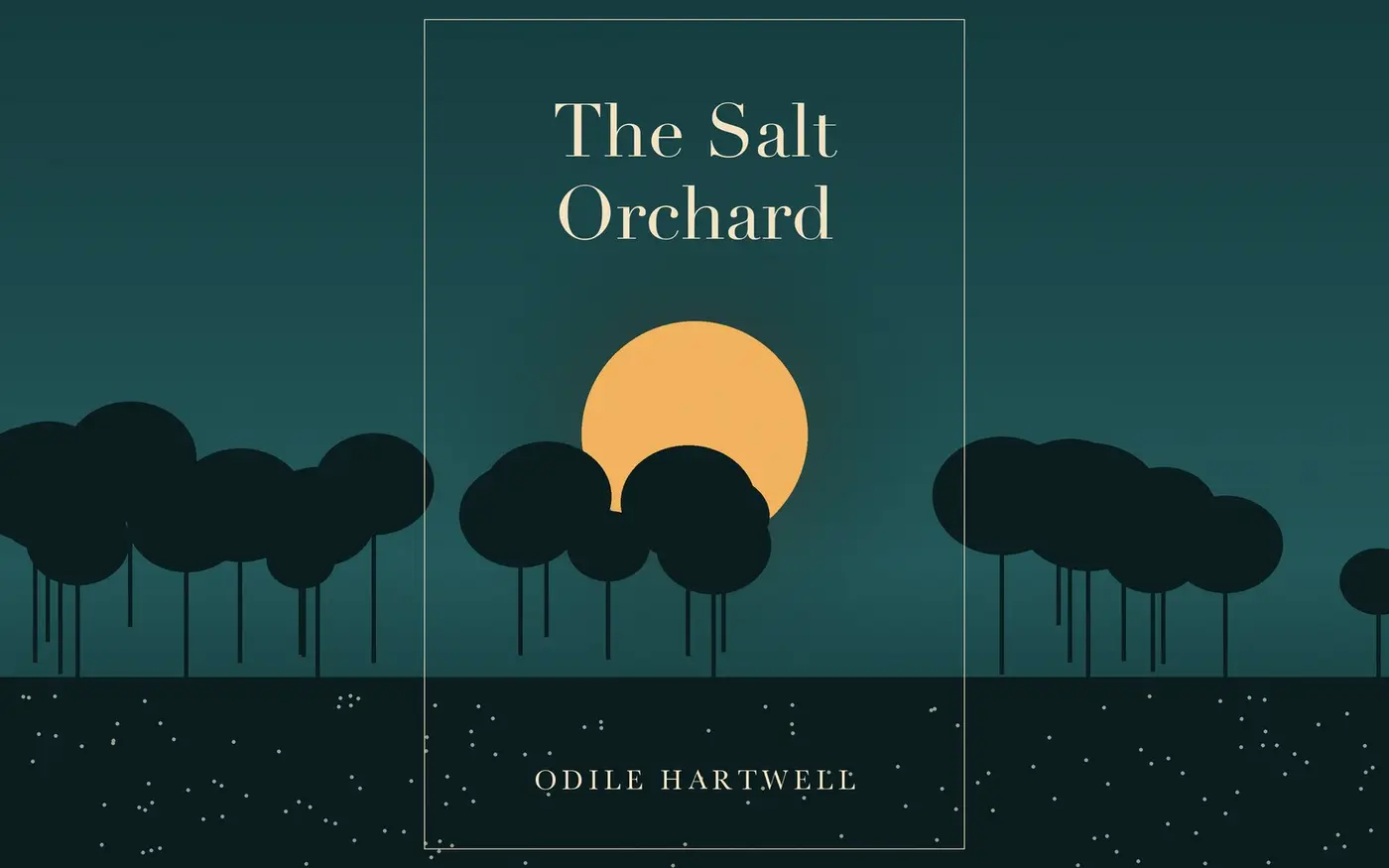
The first frost came in the night, the way it always did, without asking. By morning the orchard had turned to glass, and Agathe walked the rows with a lantern though the sky was already greying, because she had walked them with a lantern for fifty years and saw no reason to stop now.
She counted the trees as she went. Not the apples, which would come in their own time, but the trees themselves, as if one might have slipped away to the sea while she slept. Four hundred and twelve. The same as yesterday. The same, very nearly, as the year her husband planted the last of them.
At the end of the twelfth row the ground changed. It was soft there, and smelled of salt, and the grass had a grey edge to it that had not been there in spring. Agathe stood a long time looking at it, the lantern hissing in her hand.
Behind her, the farmhouse windows were lighting one by one: her son, who would want to talk about selling; her granddaughter, who would want to talk about anything else. Agathe turned her back on the sea and went in to make the porridge. There would be time enough for the twelfth row.
From The Salt Orchard, chapter one.