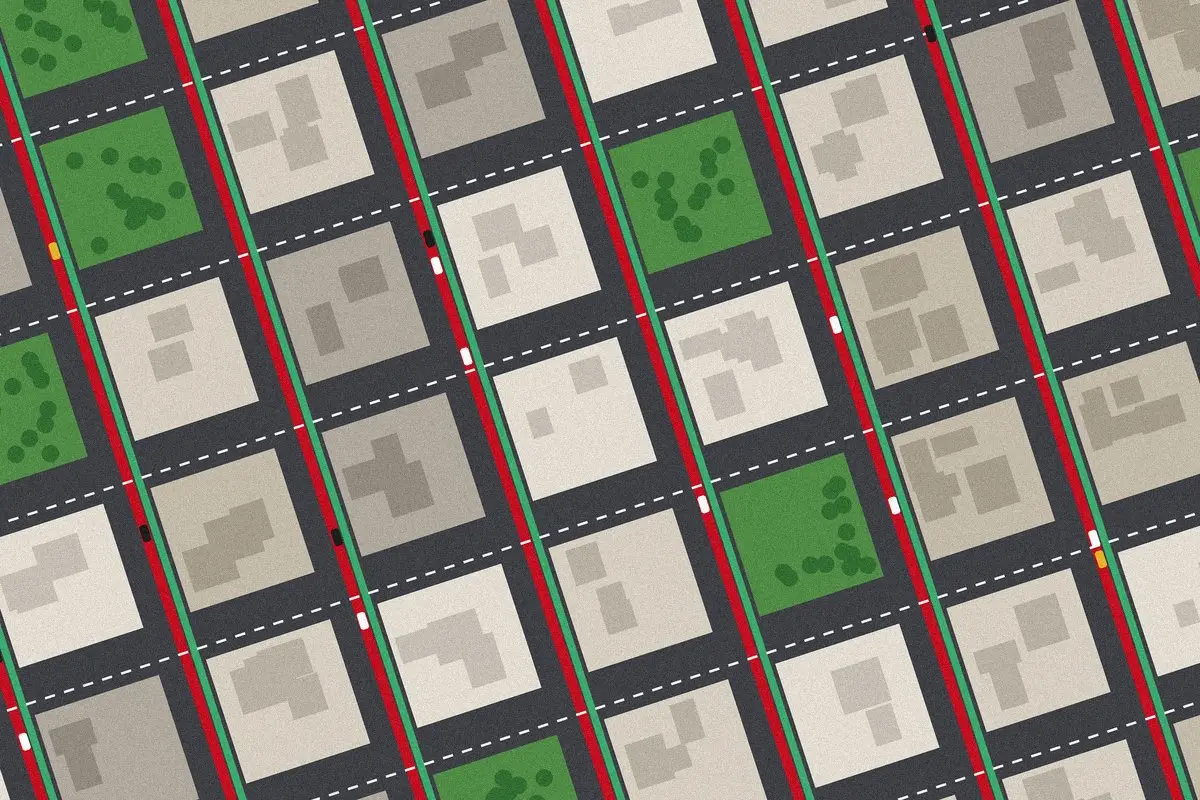
Walk down almost any street in the inner city and you are walking through a plan drawn up half a century ago, for a city of commuters who drove in at eight and out at six. That city no longer exists. Its streets do.
Today, fewer than a third of trips within the ring road are made by car. Yet two-thirds of the space between our front doors is given over to moving and storing them. Pavements are narrow, crossings are far apart, and the cycle lanes that do exist stop and start like a sentence missing its verbs.
What a redrawn street looks like
- Wider pavements on every street with a school or a shop
- Continuous, protected cycle lanes on the six main radial roads
- Bus lanes that run the full length of a route, not a few hundred metres of it
- A tree for every twenty metres of kerb
None of this is radical. Cities on this coast have done it street by street, often starting with temporary paint and planters, and kept what worked. What it needs is a plan that treats the whole grid as one thing to be redesigned, rather than a hundred separate arguments.
The council is consulting on its new transport strategy until the end of next month. Respond to it. The streets will outlast all of us, and they should fit the city we actually live in.